



.webp)
















Help our experts understand you better by filling our 2-Minute Form, to find the right education loan
Get instant loan offer suitable to your profile !

On this Page:
Wondering how to score well in IELTS? Read our complete IELTS preparation guide to excel in all the sections of IELTS!

The International English Language Testing System, IELTS, was launched in 1980 by Cambridge English Language Assessment and the British Council. It is specifically designed to test the English language proficiency of non-native English speaking people who seek to study or work abroad in English-speaking countries. IELTS is an exam holds a lot of importance for people immigrating to foreign countries for either work or higher education. The majority of universities abroad will ask for an IELTS score before taking any immigrant student in. If one is considering joining an undergraduate or postgraduate course in a university in the English speaking nations of the USA, the UK, Canada or Australia, and so on, one must take the IELTS academic version exam and obtain a minimum IELTS score.
The required score varies not only from country to country but also from university to university. Any good university will demand an IELTS score of 6.5 or above. Individual scores of the four sections - Reading, Listening, Writing, Speaking - are added up to arrive at the total score, which means the higher the sectional band scores are, the higher will be the overall score. Therefore, it is advised that every section be focussed equally and sincerely so as to get the maximum grade.
It is to help our readers achieve a desirable IELTS score, we bring to you a section-wise IELTS preparation study guide covering all the specifics of the exam from test pattern, important topics, preparation tips to strategies to follow on the day of the exam for each section. With these tips, test-takers will certainly be able to maneuver through the test easily and land a score which will help them to secure admission in their dream university.

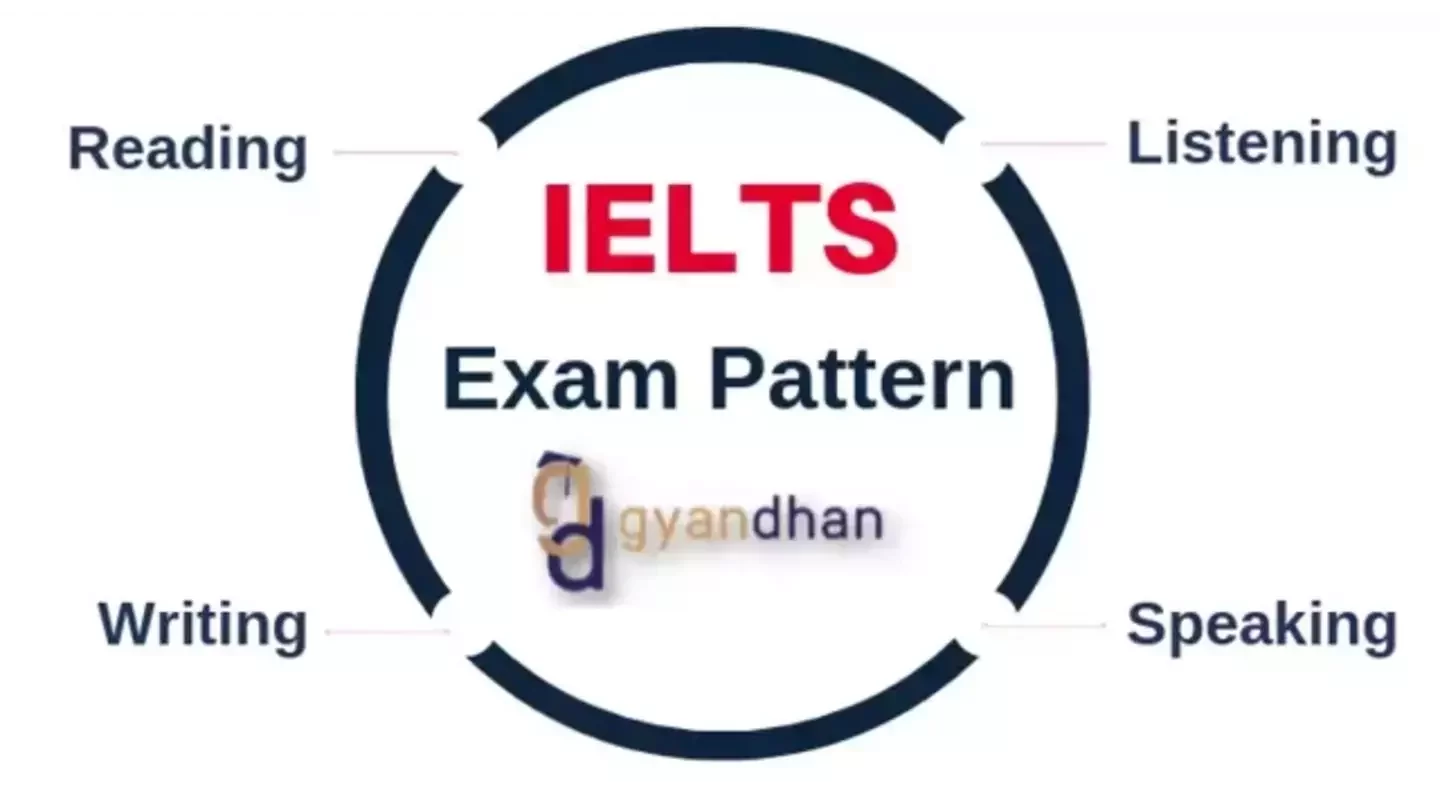
Before we begin with the preparation tips, let’s familiarize ourselves with the pattern of the whole exam. There are four parts of the test- reading, listening, speaking and writing. The Listening, Reading and Writing sections are to be completed on the day of the exam with no breaks in between. The Speaking section, however, can be completed up to one week before or after the date of the exam. The total time available for the test is 2 hours 45 minutes.
Listed below are the test patterns for each section:
This section is to be completed within 30 minutes. The examinee is provided with a set of 4 recordings in English spoken by native English speakers and has to answer the questions that follow. The questions are 40 in number. The candidates will be judged upon their ability to comprehend basic ideas and conceptual information, opinion, attitudes, tones of speakers, the purpose of conversation and the candidate’s ability to follow it.
This section is supposed to be completed in 60 minutes. There are 40 questions in total and three texts testing a variety of reading skills. The Reading test for Academic and that for the general training have a different approach from each other, with the former having questions that are more reasoning-based and analytical. The texts provided can be factual, descriptive, analytical, or discursive and may also contain graphs, diagrams or illustrations.
To know more about How To Prepare for IELTS Reading Section.
This section is also supposed to be completed within 60 minutes. There will be two questions. For the IELTS academic section, the topics are of general interest and suitable for entrance to undergraduate and postgraduate courses. For example - you will be given a picture/graph/table and be asked to elaborate upon it, or you will be given a point of view and asked to write an essay having the opposite view. Answers must be written on the sheet provided. Also, notes or bullet points will not be considered. The style of academic essays must be strictly formal.
To know more about How To Prepare for IELTS Writing Section.
The duration of this part of the exam will be from 10 -15 minutes. It will assess how well the candidate can speak in the English language. This exam, like all others, will be recorded. It is conducted by means of an oral interview. There are three parts of this test fulfilling specific purposes with respect to interaction patterns, task input, and test-takers’ output.
The first part consists of an introduction. Candidates will be asked to talk about themselves and their lives. This part lasts roughly four to five minutes. The number of questions within this part is variable.
In the second part, the candidates are given task cards, each having a specific topic which the candidate will have to talk about. The candidate will be given one minute to prepare his or her talk and will also be provided with a pencil and paper to make notes. He/she will have to speak for about 1 to 2 minutes after which the interviewer asks them a few questions related to the same topic. This part takes 3 to 4 minutes, including the preparation time. Its focus is to test the candidate’s ability to speak at length over a given topic using appropriate language and by organizing the ideas in a manner that is coherent and easy to understand.
In the third part, the interviewer asks the candidate questions regarding the topic previously given in a more general and abstract way and sometimes also in greater depth. The duration of this part extends from 3 to 4 minutes. The most important section of the exam is Speaking one. It is emphasized upon the most and is examined by way of a one-on-one interview with an examiner. Varieties of accents are also taken into consideration. Each of the above-mentioned skills is graded over a band score of 0 to 9 where 0 represents “Did not take test” while 9 represents “Expert User”.
To know more about How To Prepare for IELTS Speaking Section.
 The first and foremost step in the IELTS preparation should be to understand the pattern of the test. The candidates should know what the test wants out of them in order to ace it. Therefore, they must do an in-depth section-wise study of the pattern.
Do not wait for the eleventh hour to begin your preparation. Consistency and practice are very important to become a pro at any language, hence it is advised that the candidates start their preparation well in advance.
Study as per a time table. It can help one become organized. Time tables also prevent overemphasis or ignorance of any particular section.
Focus on conceptual clarity. Your concepts should be crystal clear. Pretentious or half-knowledge is very easy to spot and could cost you a good IELTS score. Therefore, candidates must know their concepts thoroughly and not depend upon memorizing anything.
Make sure you practice and revise regularly. The practice is the cornerstone of perfecting any particular language. In language, just like in math, the more you practice, the better you are. Also, keep some time for revision every day to go over the concepts previously learned so that you can retain everything properly.
It is not mandatory to join a preparation course in an institute, but if the candidate feels the need of a mentor or guidance, then he/she can enroll in such an institute for the maximum benefit.
The best person to give you advice for an exam is someone who has already taken it. Therefore, if you know someone who has attempted the test, do reach out to them for information.
The first and foremost step in the IELTS preparation should be to understand the pattern of the test. The candidates should know what the test wants out of them in order to ace it. Therefore, they must do an in-depth section-wise study of the pattern.
Do not wait for the eleventh hour to begin your preparation. Consistency and practice are very important to become a pro at any language, hence it is advised that the candidates start their preparation well in advance.
Study as per a time table. It can help one become organized. Time tables also prevent overemphasis or ignorance of any particular section.
Focus on conceptual clarity. Your concepts should be crystal clear. Pretentious or half-knowledge is very easy to spot and could cost you a good IELTS score. Therefore, candidates must know their concepts thoroughly and not depend upon memorizing anything.
Make sure you practice and revise regularly. The practice is the cornerstone of perfecting any particular language. In language, just like in math, the more you practice, the better you are. Also, keep some time for revision every day to go over the concepts previously learned so that you can retain everything properly.
It is not mandatory to join a preparation course in an institute, but if the candidate feels the need of a mentor or guidance, then he/she can enroll in such an institute for the maximum benefit.
The best person to give you advice for an exam is someone who has already taken it. Therefore, if you know someone who has attempted the test, do reach out to them for information.

3 to 6 weeks of preparation can be sufficient for an average student to prepare for the IELTS exam. The initial portion of time should be devoted to understanding the paper pattern, while the rest should be invested in mock tests. If the mock test score is below 7, a couple of more weeks of preparation should be put into it until a desired mock score between 7 to 9 is reached.
Spend equal time in each section. No section is supposed to be ignored. Remember that you need to score well in all the sections in order to get an overall IELTS score above 6.5.
Solve sample papers. Practicing sample test papers is one of the best ways to prepare for any exam. They familiarise the candidate with what to expect in the actual exam and also provide enough practice and also help them to realize their strong and weak areas and work accordingly.
Time management is a crucial part of one’s preparation. Candidates need to take account of the time they are spending on each section while studying as well as on their mock tests. Four days of the week can be assigned to each section of the exam, two days for mock tests, and one day for self-assessment to know your weaknesses and for working upon them. As time progresses, devote more hours to sections that are your weaknesses.
The English required for the exam is not supposed to be ornamental. A basic sense of grammar and correctness is all that the examiner requires of the test-taker. Therefore, candidates should not be disheartened if their English is not ornamental enough. Grammar should be their main focus. They should make it a point to speak and write more English correctly well before this exam.
practice listening to not just one person speaking but also to conversations between multiple speakers.
practice making notes while listening. Multi-tasking is a requirement for this section.
Use short handwriting or abbreviations to reduce the time taken to make notes.
Listen to podcasts, watch movies or TV series in not just British English but also in American or Australian English to be familiar with the accents. This will help in faster comprehension.
Read as much as possible
Read fiction as well as non-fiction (stories, editorials, essays, etc.).
Make notes. This will help the candidate in discerning what's worth making note of and what isn't.
Practice comprehension exercises.
Read multiple essays and analyze not just the content in them but also the title and the overall point they are trying to make.
Underline important words or points which you come across while reading magazines, newspapers, or any written material.
Write essays. Make sure they have a proper introduction, body, and conclusion. They should not be just a bunch of ideas loosely structured and written.
Practice grammar thoroughly.
Keep a track of time.
Write something even for topics you have no idea about.
Refrain from using first-person pronouns.
A certain spontaneity is required from candidates in this section, therefore, start practicing well enough in advance to get innate concepts ingrained in mind.
Emphasise correct pronunciation and grammar.
Train yourself to be quick and responsive in replies. However, being responsive doesn’t mean not thinking beforehand. Take a minute or half, consolidate your response and then speak.
Speak confidently. The tone of the voice has a lot of impact on how a response would be perceived.
There are several self-help books available offline and online that can be referred to by the candidates to gain more perspective. Some of which are listed below -
The Official Cambridge Guide to IELTS
How to Prepare for IELTS
Official IELTS Practice Materials Volume 1
Official IELTS Practice Materials Volume 2
Top Tips for IELTS Academic by Cambridge
Get Target Band 7: IELTS Academic Module: How To Maximize Your Score.
Cambridge English: IELTS 11 Academic with Answers
The following are some innovative apps for IELTS preparation which candidates can use to prepare for IELTS.
IELTS Full ( android and IOS)
IELTS Word Power (has a bank of questions for improving vocabulary; available on Android as well as IOS platform)
Learn English Audio and Video (has numerous podcasts and videos and is very user-friendly; Available on both Android and IOS platforms)
IELTS Materials (has free material for self-preparation besides practice tests; available on all platforms)
IELTS Practice (covers all sections of the exam; available on all platforms)
IELTS Essay
Mnemonic Dictionary
IELTS Prep App (an app by the British Council itself having free practice tests, grammar tips, quizzes and more; available on both Android as well as IOS platforms) .
The last one week before the exam is a crucial time and plays a major role in determining your performance on the day of the exam. One needs to be cautious as to the extent of studying one needs to do or the major areas one needs to emphasize to extract the maximum benefit out of the preparations done so far. Here are some tips which candidates can follow to fine-tune their preparations in the last week before the test.
Focus more on practicing the skills you already have than learning something new. It will take a lot of time perfecting the new skill, and this can negatively affect your performance on the exam day.
During this week, you should also be able to train your mind to maintain its cool during this period and on the day of the exam. Try to make your mind comfortable with the idea of exam. Do not be anxious. Hopefully, you have spent the last one month practicing mocks and working hard, and that will show in your IELTS result. Be positive.
Devote the first four days of the week to each section of the test. Read newspaper, articles, and blogs. Listen to English podcasts. Practice writing.
Do not memorise your answers.
Believe that your hard work is enough and instead of panicking the day before the exam, take a good night’s sleep.

Check Your Education Loan Eligibility

Ask from a community of 10K+ peers, alumni and experts
Published date: 16 Oct 2019 Updated on: 06 Apr 2020 The International English Language Testing System, IELTS, was launched in 1980 by Cambridge English Language Assessment and the British Council. It is specifically…
2 replies from the GD Connect community · last active about 6 years ago
Trending Blogs
Similar Blogs

Network with a community of curious students, just like you
Join our community to make connections, find answers and future roommates..Country-Wise Loans
Best Lenders for Education Loan

ICICI Bank

Axis Bank

Union Bank

Prodigy

Auxilo

Credila

IDFC

InCred

MPower

Avanse

SBI

BOB

Poonawalla

Saraswat